
It’s been four years since we collectively stood at an invisible intersection without directions, wondering which road led back to feeling productive, inspired, and connected within our community.
And if you’re like me, you are now helping clients navigate this massive reexamination of the purpose of the office. While there’s no one-size-fits-all solution, it is clear the office’s most powerful opportunity is as a convenor – a connector.
With a background in architecture and interior design, I am naturally inclined to watch and take note of where people want to connect. To capitalize on the role of the office as a convenor, our challenge today is to dissect the details of these places and merge them.
Informed by my observations and those of my talented team, here are some examples of how we’re reinterpreting gathering spaces to harness the power of connection in office design.
Textured comfort and functional elegance
Consider the introduction of softer lines and comforting textures in ancillary furniture. Imagine an overstuffed armchair or deep sofa in an inviting boucle fabric, set against a textured rug and accompanied by tree stump side tables. These pieces, when arranged thoughtfully, can break up the monotony of standard workstations.
While this may seem like outdated advice, with the burgeoning trend of individually owned workspaces reemerging as a coveted benefit, this tried-and-true technique is still very relevant. Such setups not only offer visual and tactile contrast to the usual sit-stand workstations but also provide much-needed respite opportunities near primary workspaces.
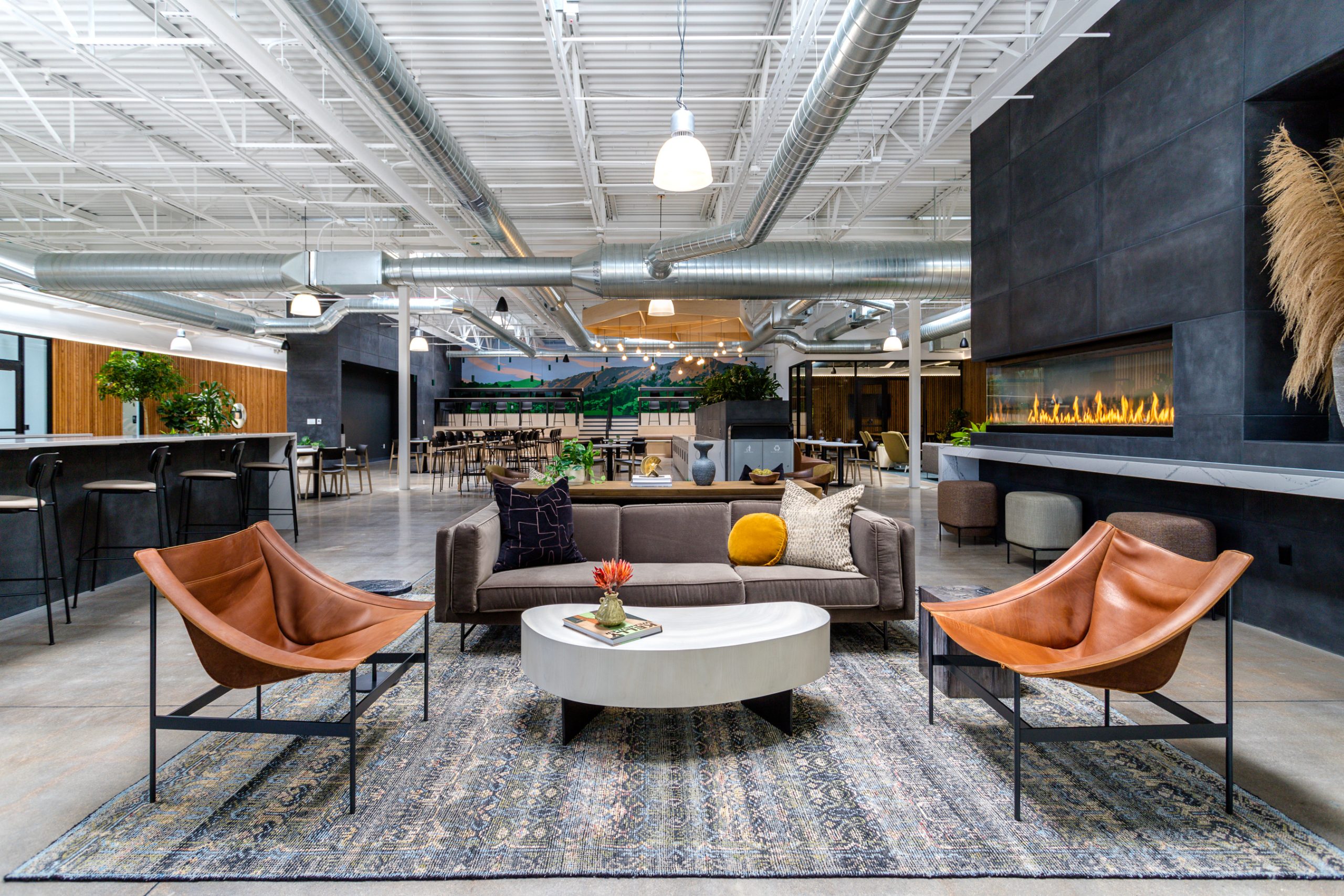
Intimacy is created through hospitality-driven design in a large open office amenity space.
Personalized spaces and thoughtful styling
In owned spaces, like private offices or individual workstations, allowing for personal touches can significantly enhance the sense of ownership and comfort. Designers can curate a selection of personal items, such as ottomans or picture frames, ensuring the space remains aesthetically pleasing while still personalized.
Having a cohesive strategy for styling the office with décor elements that extend beyond ancillary spaces and into owned spaces will contribute to a warm, lived-in feel.
Creating intimacy through visual layers
The scale and feel of a workspace can be dramatically altered by adding visual layers with finishes, accessories, and décor. How an area rug interacts with your throw pillows and the art on your wall will evoke an emotional response. Pair those layers with textural wallcoverings and lighting at different horizons (hanging pendants, sconces on the walls, floor lamps, and more) and you can make a space feel more personal and intimate.
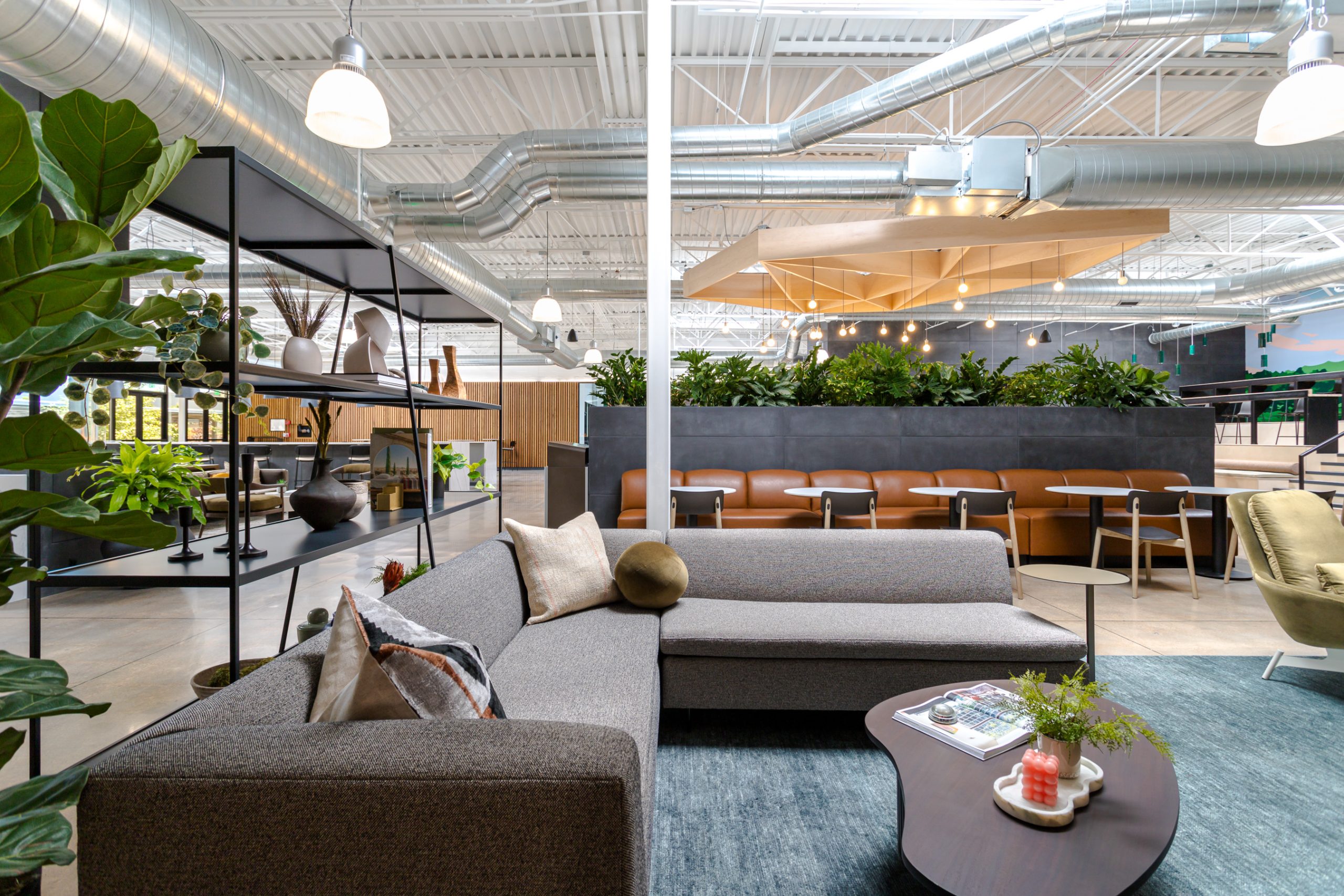
Soft lines and inviting textures are layered in this lounge setting to create an inviting space for people to connect.
Engaging the senses to enhance comfort
A truly hospitable office engages all senses. Incorporating reed diffusers throughout the space can create a signature scent, much like hotels, that welcomes employees and visitors alike. Where appropriate, playing music can add an uplifting or soothing background to the workday. Adding a blanket to the back of a sofa can be a simple yet thoughtful gesture of comfort for those who get cold during the workday.
Artful expression of culture
Art can be a powerful tool in defining an office’s character. For example, a company that identifies closely with the Colorado lifestyle might consider a curated collection of photographs and images of the state, varying in size and frame style, thoughtfully arranged on a large conference room wall. This not only celebrates local culture but adds interest and ownership for those using the space.
The shift towards hospitality-driven design in office spaces is not merely a trend—it’s a response to our evolving understanding of work and well-being. By incorporating these elements, we can create offices that not only foster productivity but also provide a warm, welcoming, and inspiring environment for all.